Is Roller Skating Good Exercise? Calories, Benefits & Workouts
Turn your next skate into a real workout
Choose supportive quad or inline skates, add properly fitted protection, and build your fitness one controlled session at a time.
Shop Fitness & Inline Skates →Yes—roller skating is good exercise. A steady session can provide moderate-to-vigorous cardiovascular activity while training your legs, hips, balance, and coordination. As a skating exercise, it combines continuous aerobic movement with the balance demands of a learned skill. The 2024 Compendium of Physical Activities rates general roller skating at 7.0 METs, recreational inline skating at 7.5 METs, and moderate inline training at 9.8 METs. In plain language, a purposeful skate can demand about as much energy as jogging or moderate cycling, depending on your pace and technique.
It is also an activity people often stick with because it feels like a skill and a social outing, not just a workout. That matters: the most effective exercise is usually the one you enjoy enough to repeat.
This guide explains realistic calorie estimates, the muscles skating uses, how quad and inline workouts differ, and three sessions you can start with. If you are completely new on wheels, learn the movement basics in our step-by-step roller skating guide before adding speed or intervals.
How Many Calories Does Roller Skating Burn?
Calorie burn depends on body mass, pace, terrain, technique, wind, stops, and how much of the session you spend actually moving. A fitness watch can also be wrong, especially when it guesses from wrist movement or an incomplete activity profile.
The most useful comparison comes from METs, or metabolic equivalents. The 2024 Adult Compendium of Physical Activities assigns standardized energy costs to different activities:
| Skating Activity | MET Value | Practical Description |
|---|---|---|
| General roller skating | 7.0 | Continuous recreational quad skating |
| Recreational inline skating at about 14.4 km/h | 7.5 | Comfortable trail or fitness pace |
| Moderate inline training at about 17.7 km/h | 9.8 | Sustained, purposeful workout pace |
| Fast inline training at 21–21.7 km/h | 12.3 | Advanced pace, not a beginner target |
Using the standard MET calorie estimate, here is what 30 minutes of continuous skating may look like:
| Body Mass | General Roller Skating (7.0 METs) | Recreational Inline (7.5 METs) | Moderate Inline Training (9.8 METs) |
|---|---|---|---|
| 60 kg (132 lb) | ~221 calories | ~236 calories | ~309 calories |
| 75 kg (165 lb) | ~276 calories | ~295 calories | ~386 calories |
| 90 kg (198 lb) | ~331 calories | ~354 calories | ~463 calories |
These are planning estimates, not measurements or weight-loss guarantees. A beginner practising starts and stops may burn less than the table suggests because the session is not continuous. An experienced skater holding a low stance, climbing gentle grades, or doing intervals may use more energy.
Roller Skating vs. Walking, Cycling, and Running
The same Compendium gives brisk level walking a value of 4.8 METs, general cycling 7.0 METs, self-selected jogging 7.5 METs, and running around 8 km/h a value of 8.5 METs. That puts steady skating above brisk walking and in the same broad range as general cycling or jogging.
The comparison is about energy demand, not which activity is “best.” Running is easier to start without equipment. Cycling may suit longer distances. Skating adds balance, lateral movement, and a skill-learning component that changes the workout as you improve.
What Muscles Does Roller Skating Work?
Skating is driven by a sideways push rather than the mostly forward-and-back pattern of walking. That changes where you feel the work.
- Glutes and hip abductors push the skate away from your centre line and help stabilize the pelvis on one leg.
- Quadriceps hold the bent-knee skating position and extend the leg during each stride.
- Hamstrings assist with hip control and bring the recovering leg back underneath you.
- Calves and ankles make small corrections while you balance and control the skate.
- Core muscles keep your torso quiet while force travels through alternating legs.
- Adductors and groin muscles help draw the leg back in and control lateral movement.
A 2024 roller-skating electromyography case study found that higher speeds increased lower-limb muscle activation and coordination demands. It was a case study of an elite speed skater, so it should not be treated as a precise prescription for recreational skaters. The useful takeaway is simpler: speed and technique change the muscular load, so progression should be gradual.
Skating is not a complete strength program by itself. It trains the lower body and balance well, but it does not fully cover pushing, pulling, and upper-body strength. Add separate resistance work if your goal is all-around fitness.
Five Fitness Benefits of Roller Skating
1. It Builds Cardiovascular Endurance
Continuous skating raises heart rate and breathing. The Public Health Agency of Canada lists skating as moderate-to-vigorous activity and recommends that adults ages 18–64 get at least 150 minutes of moderate-to-vigorous activity each week.
You do not need to begin at 150 minutes. Two short sessions are a better starting point than one exhausting effort that leaves you too sore or nervous to skate again.
2. It Trains Balance and Coordination
Every stride includes a brief single-leg phase. Your ankles, hips, eyes, and inner-ear balance system constantly work together to keep you centred over rolling wheels. Skills such as gliding, turning, crossovers, and controlled stops increase the coordination challenge without requiring maximum speed.
3. It Strengthens the Lower Body
Holding a low, stable stance creates time under tension for the thighs and hips. Hills, headwinds, deeper knee bends, and faster accelerations increase the demand. Good form matters more than forcing a very low position: keep knees tracking over toes and stop when fatigue makes your stance collapse.
4. It Avoids Repeated Running Foot Strikes
Skating replaces repeated landing steps with a rolling glide, so it does not create the same foot-strike pattern as running. That does not make skating impact-free. Falls, rough pavement, sudden stops, and aggressive tricks can still load joints and cause injury.
If you have an injury, arthritis, balance disorder, heart condition, or another health concern, ask a qualified health professional whether skating is appropriate and how to modify it. A blog cannot assess your individual risk.
5. It Can Support Mood and Consistency
The Canadian government identifies improved mood, sleep, energy, concentration, and stress management among the general benefits of physical activity. Skating can add music, outdoor time, skill goals, and community to that movement. Those features do not guarantee a mental-health outcome, but they can make regular activity more appealing.
Quad vs. Inline Skating for Exercise
Both can deliver an effective skating workout. Choose the wheel layout that matches the session you want to repeat.
| Goal | Quad Roller Skates | Inline Skates |
|---|---|---|
| Social or rink fitness | Excellent | Good where permitted |
| Dance, rhythm, and footwork | Excellent | Possible but less common |
| Long paved trails | Capable with outdoor wheels | Usually more efficient |
| Sustained speed and distance | Moderate | Excellent |
| Tight skill drills | Excellent | Excellent with the right setup |
| Rougher pavement | Less forgiving | Larger wheels generally roll better |
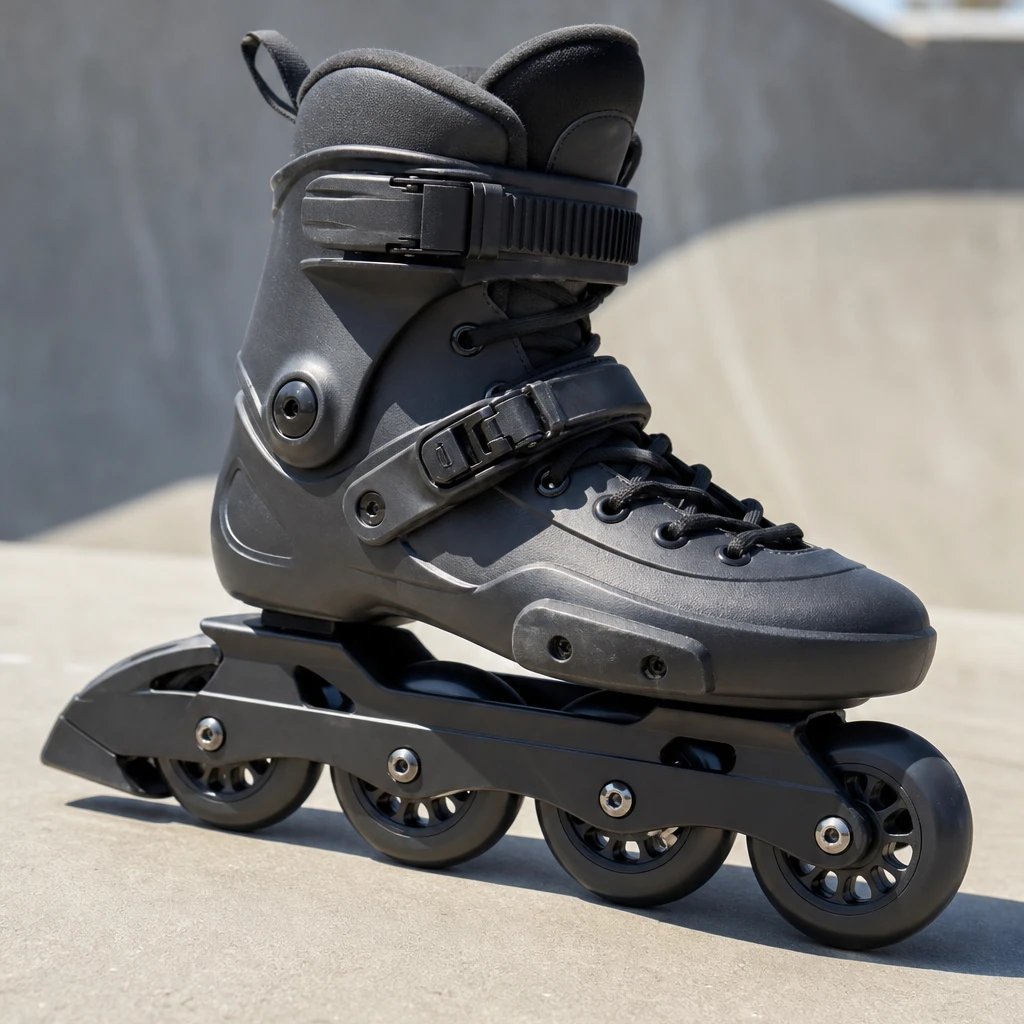
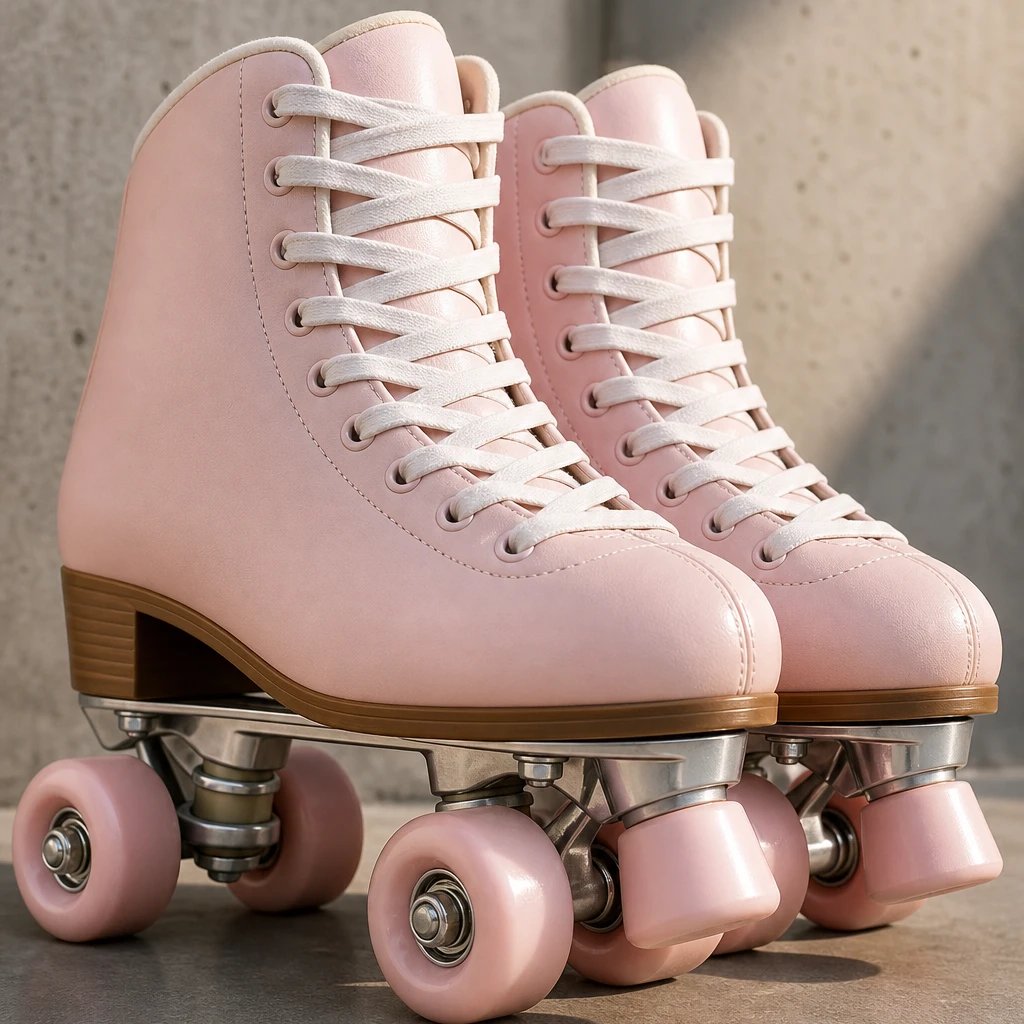
Quads make it easy to turn a rink session into repeated footwork, dance, and direction-change drills. Inlines are usually the practical choice for continuous trail mileage and speed intervals. Our inline skates vs. roller skates comparison explains the handling differences in more detail.
When you are ready to choose equipment, browse quad roller skates or inline skates. Measure first; poor fit creates heel lift and wasted movement. The skate size calculator can help narrow the correct brand size.
Three Roller-Skating Workouts for Beginners
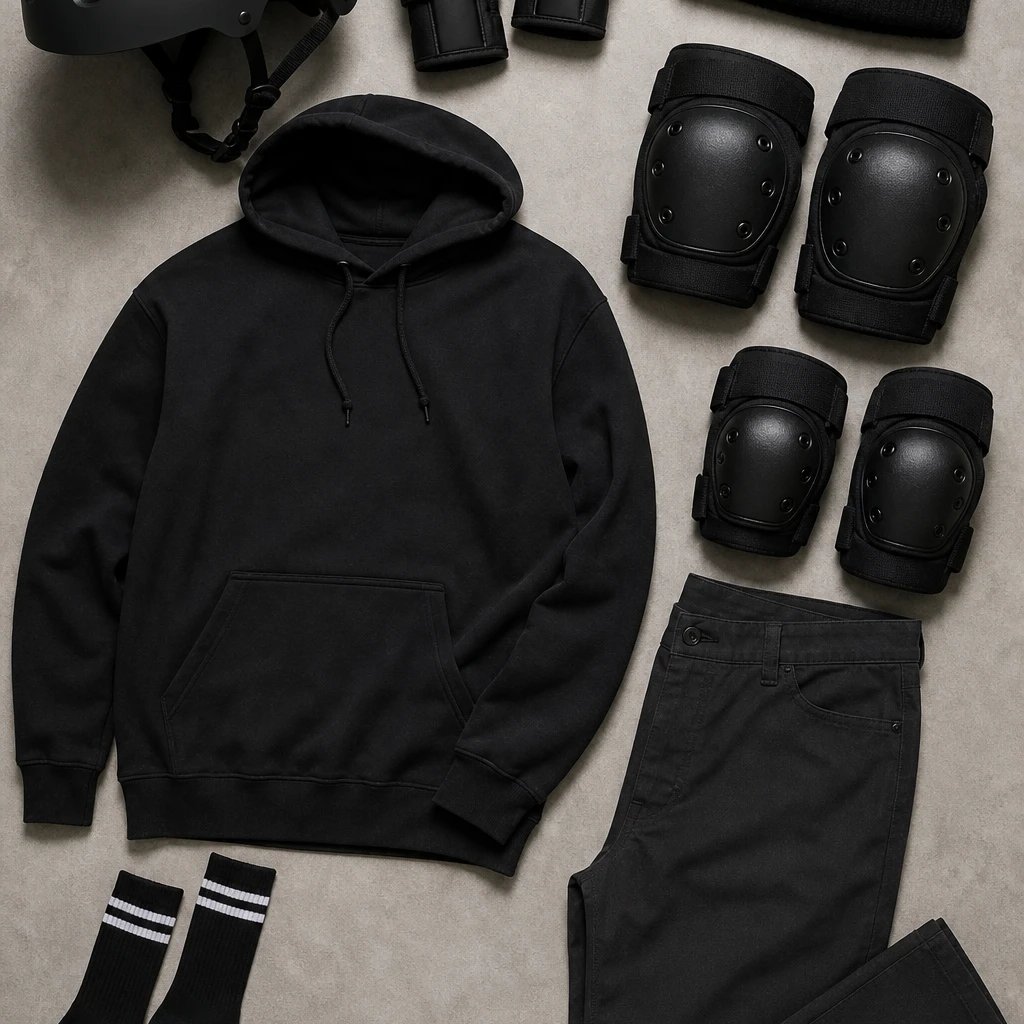
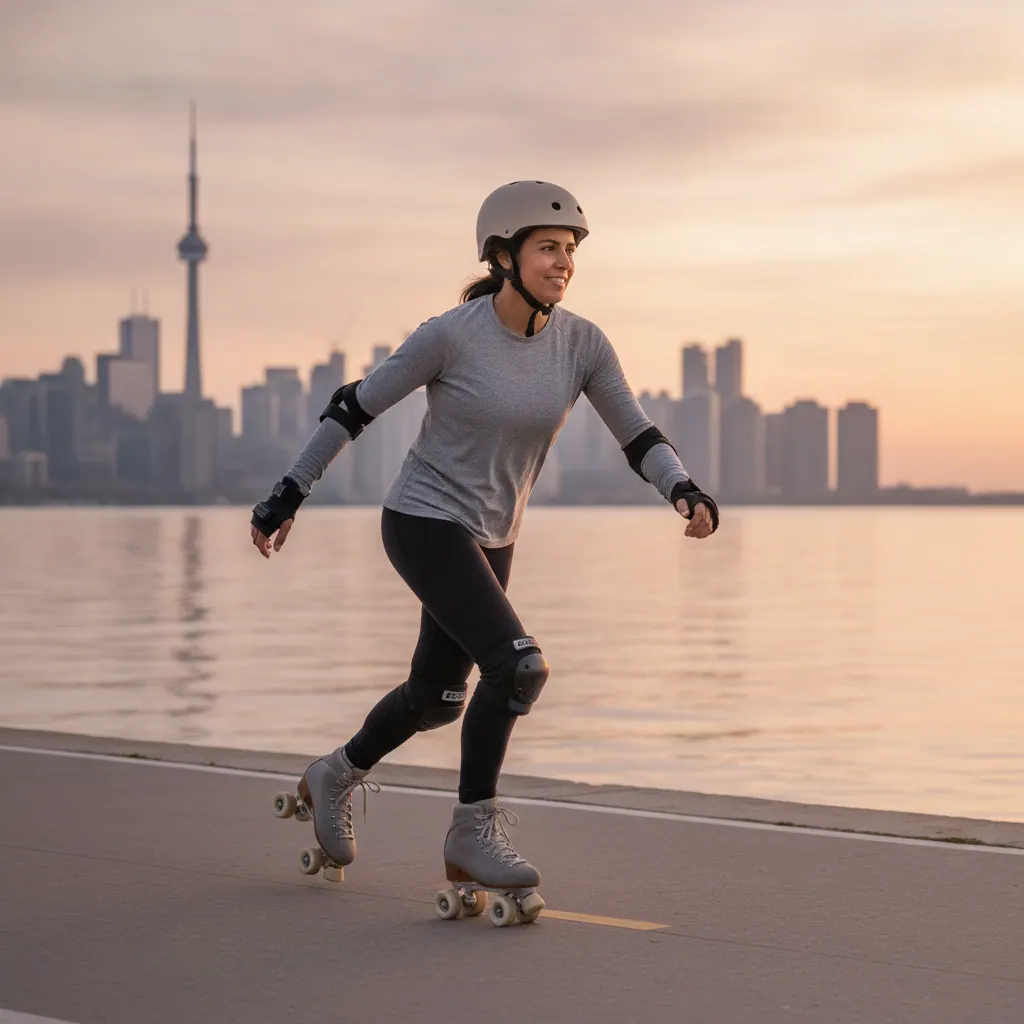
Use a flat, dry, traffic-free surface with predictable pavement. You should already be able to roll, turn, and stop on command. Wear a certified helmet, wrist guards, knee pads, and elbow pads from the protection collection.
Workout 1: 20-Minute Easy Endurance Skate
This is the best first fitness session.
- 5 minutes easy: relaxed marching, short glides, gentle turns, and two controlled stops.
- 10 minutes steady: skate at a pace where you can speak in full sentences. Keep your stride smooth rather than long.
- 5 minutes easy: reduce speed, stand a little taller, and finish with controlled laps.
Repeat twice in the first week. Add five minutes only when you can finish with stable technique and no unusual pain.
Workout 2: 30-Minute Cardio Intervals
Try this after you can skate steadily for 20 minutes.
- 5 minutes easy warm-up.
- Complete five rounds of 90 seconds at a brisk but controlled pace, followed by 90 seconds easy.
- Spend 5 minutes on technique: controlled scissors, slaloms, or wide turns—not jumps.
- Finish with 5 minutes easy.
The brisk intervals should make talking harder, but they are not sprints. Leave enough control to stop safely at any moment.
Workout 3: 40-Minute Skills and Strength Session
This session uses technique to add muscular work without chasing top speed.
- 8 minutes easy warm-up.
- Complete three rounds of: 2 minutes steady skating, 2 minutes controlled scissors or bubbles, and 2 minutes easy recovery.
- Skate 8 minutes continuously at a comfortable pace.
- Finish with 6 minutes easy.
Change direction regularly at a rink so both sides share the turning load. Outdoors, do not use blind corners or busy multi-use paths for drills.
A Four-Week Skating Exercise Plan
| Week | Sessions | Goal |
|---|---|---|
| 1 | Two 20-minute easy skates | Finish balanced and confident |
| 2 | Three 20–25-minute easy skates | Build consistency and stopping control |
| 3 | Two easy 30-minute skates + one short interval session | Add intensity without losing form |
| 4 | One easy skate, one interval skate, one skills session | Reach 90–120 controlled minutes |
From there, work gradually toward Canada’s 150-minute weekly activity recommendation if it fits your health and schedule. Include rest or easy days. The Canadian guidance also calls for muscle- and bone-strengthening activity, so complement skating with age- and ability-appropriate strength work rather than assuming every fitness need is covered on wheels.
In winter, use a dedicated rink, community gym session, or roller-skating event rather than letting outdoor consistency disappear. Our guide to indoor roller skating across Canada explains how to find sessions city by city.
How to Make a Skating Workout Safer
- Learn to stop before training for speed. Fitness pace without emergency control is not fitness—it is a crash waiting to happen.
- Inspect the route first. Look for gravel, water, frost damage, steep descents, driveways, and blind intersections.
- Warm up on skates. Begin with easy rolling and controlled turns rather than static stretching in unstable footwear.
- Build duration before intensity. Add a few minutes first; add intervals only after continuous skating feels controlled.
- Use complete protection. A helmet, wrist guards, knee pads, and elbow pads reduce the consequences of common beginner falls.
- Stop for sharp or changing pain. Normal effort and fatigue are different from sudden pain, dizziness, chest discomfort, or loss of coordination.
- Do not train in rain or ice. Wet bearings, reduced grip, and hidden surface hazards are a bad combination.
Frequently Asked Questions
Is 30 minutes of roller skating good exercise?
Yes. Thirty minutes of continuous skating can provide a meaningful moderate-to-vigorous aerobic session. A beginner may need breaks, and that is fine. Consistent controlled movement matters more than reaching an exact calorie number.
Can roller skating help with weight loss?
It can contribute to the activity side of an energy deficit, but skating does not guarantee weight loss. Food intake, total activity, sleep, medications, health conditions, and individual physiology all matter. Use skating to build fitness and a repeatable movement habit rather than treating watch-reported calories as permission or punishment.
Is roller skating cardio or strength training?
Primarily cardio, with substantial lower-body muscular endurance and balance demands. It does not replace a complete resistance-training program because upper-body pulling and pushing receive little overload.
Does inline skating burn more calories than quad skating?
Not automatically. Inline skates often support higher sustained speeds and longer trail sessions, which can raise total energy use. A hard quad dance or rink workout can demand more than an easy inline cruise. Pace, duration, terrain, and skill matter more than wheel layout alone.
Is roller skating easier on the knees than running?
Skating does not repeat the same landing pattern as running, but “easier” depends on the person, technique, surface, and condition. Deep knee flexion, lateral pushing, falls, and poor alignment can still aggravate symptoms. Ask a health professional for individualized advice if you have knee pain or a diagnosed condition.
How often should a beginner roller skate for exercise?
Start with two sessions per week, about 20 minutes each, and leave recovery time between them. Add a third session or five minutes at a time once your balance, stopping, and next-day recovery remain comfortable.
The Bottom Line
Roller skating is legitimate aerobic exercise, not just recreation. General roller skating sits around 7.0 METs, recreational inline skating around 7.5, and purposeful inline training can go higher. It trains cardiovascular endurance, legs, hips, balance, and coordination while giving you skills and routes to explore.
Start with control, not calories. Learn to stop, choose equipment that fits, wear protection, and repeat short sessions until they feel easy. Then add time, technique, and intervals gradually. If you need the foundations first, begin with our adult roller-skating tutorial or the complete Canadian beginner guide—then come back and turn those skills into a workout.