How to Roller Skate: Step-by-Step Guide for Adult Beginners
Skates that fit make learning twice as fast
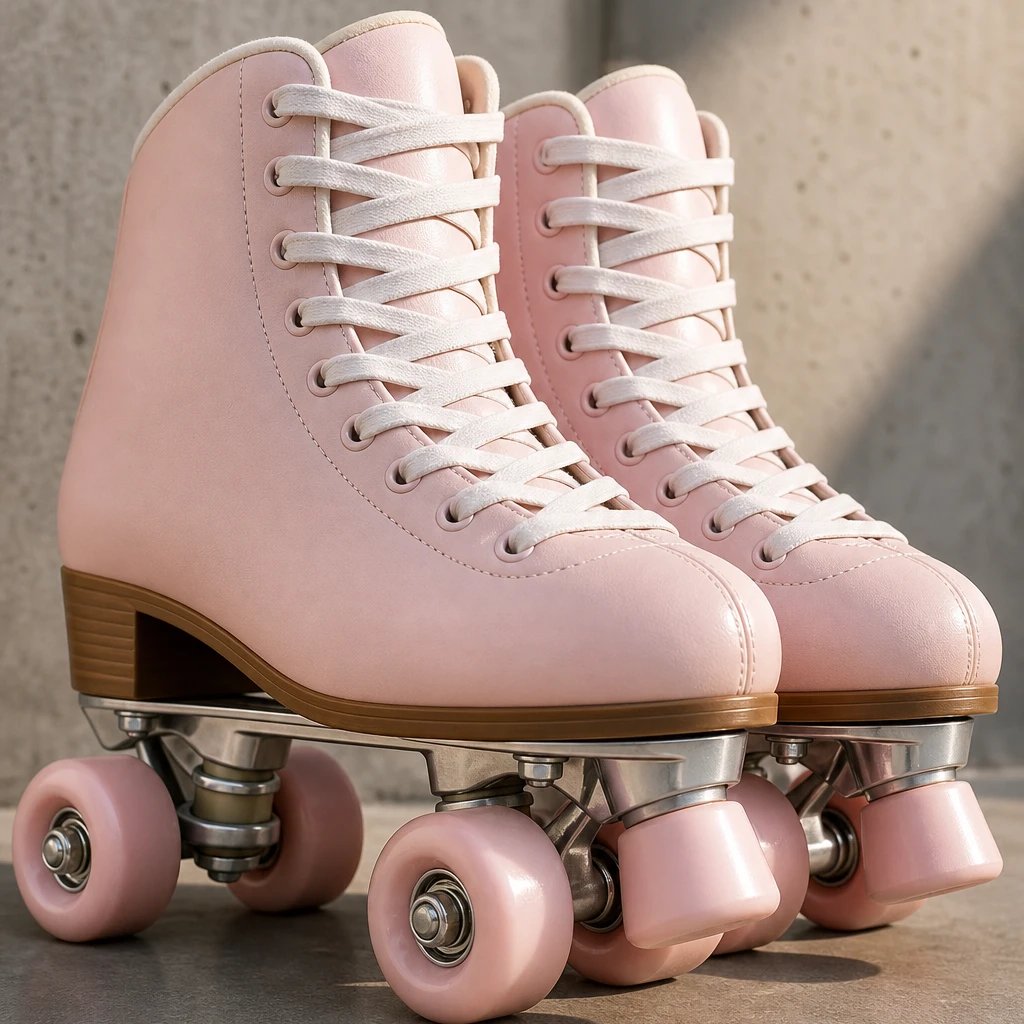
Loose boots are the number one reason beginners feel wobbly. Get sized properly, then shop quads that actually support your ankles.
Shop Roller Skates →Most adults who try roller skating for the first time make the same discovery within about ninety seconds: the hard part isn't moving forward, it's standing still. Your feet want to roll in two directions at once, your arms windmill, and every instinct you have says stiffen up — which is precisely the wrong thing to do.
This guide is the physical how-to. Not what skates to buy, not where to go — just what to do with your body, in order, from the moment you stand up. If you already have skates on your feet, start at step one. If you're still deciding what to buy, our complete beginner's guide covers gear and sizing first.
Before You Roll: A Two-Minute Setup Check
Skip this and you'll spend the session fighting your equipment instead of learning.
Lace tight at the ankle, looser at the toes
Your toes need a little room; your ankle needs almost none. If you can lift your heel inside the boot when you flex forward, you're too loose — that heel lift is what makes beginners feel like they're going to roll an ankle. Tighten the middle and top hooks until the boot moves when your leg moves.
Check your toe stops
Grab each toe stop and try to twist it. If it moves, tighten it before you skate — a toe stop that spins mid-stop is how people fall forward. If your skates are new, the stops are often set high from the factory; you want them close enough that a small toe-point makes contact without you having to lift your whole leg.
Find genuinely smooth ground
The single biggest predictor of a good first session is surface quality. Look for a smooth, flat, empty stretch — an underused parking lot on a Sunday, a tennis court, a school pad. Avoid: driveways with any slope, anything with cracks, and gravel dust (it acts like ball bearings under your wheels).
Indoors is better still if you can get it, since rink floors are predictably smooth and there's a barrier to hold. Our guide to roller rinks and indoor skating across Canada lists where to find sessions near you.
Step 1: Stand Up the Safe Way
Don't stand up on a hard flat floor. Sit on a bench or curb, then:
- Put both hands on the bench beside your hips.
- Bring your feet underneath you, close together, toes slightly out in a small V.
- Push up with your hands, not your legs, and come up with knees already bent.
The V-shape matters. Feet parallel means both skates can roll forward at once. Heels together, toes apart means they physically can't — it's a self-locking position, and it's where you'll return every time you feel unstable.
Step 2: Learn the Ready Position
Everything in skating happens from one posture. Get this right and most other problems disappear.
- Knees bent — more than feels natural. You should be able to see your toes past your knees. This is the single most common correction we give people.
- Weight on the balls of your feet, not your heels. Leaning back is what sends skates shooting out in front of you.
- Chest up, hands in front where you can see them, roughly at hip height.
- Small stance. Feet under your hips, not spread wide.
Stand in this position for a full minute before you try to move. Bounce gently. Get comfortable with the fact that bent knees feel more stable, not less — because a bent knee can absorb a bump, and a locked one can't.
Step 3: March Before You Skate
Don't try to glide yet. From the ready position, simply march on the spot — lift one skate a couple of centimetres, put it down, lift the other.
This teaches your brain the thing it actually needs to learn: how to balance on one skate for a fraction of a second. Every stride you'll ever do is just a longer version of this.
March in place for a minute, then march slowly forward. You'll be moving. It won't look elegant. That's fine — you're skating.
Step 4: The V-Stride
Once marching feels stable, turn it into a real stride.
- Start in the V position, knees bent.
- Push one skate out to the side — not backwards — at roughly 45 degrees, pressing through the inside edge of the wheel.
- Let that push send your weight onto the other skate.
- Bring the pushing foot back under your body.
- Repeat on the other side.
The mistake almost everyone makes is pushing backwards, like walking. Roller skates don't grip that way — a backwards push just spins the wheels. Push sideways and the wheel bites, and you go forward. Say "out and in, out and in" to yourself; it helps more than it should.
Step 5: Glide
Once you can stride, spend a moment on each push instead of immediately putting the other foot down. Push, then ride that one skate for a count of one. Then two. Then three.
Gliding is where skating starts feeling like skating rather than a controlled fall. It's also the foundation of every skill that comes later — including skating backwards, which is much easier than it sounds once your glide is solid.
Step 6: How to Stop
Learn this before you go anywhere with a slope. Being able to start and not stop is how beginners end up hurt.
The toe stop drag (learn this first)
- From a slow roll, shift most of your weight onto one skate.
- Point the toe of the other foot down and let the stop drag on the ground behind you.
- Increase pressure gradually.
Keep the dragging leg behind your body, not beside it. If it creeps forward, the stop can catch and pitch you forward.
The plough stop
Push your heels apart so your toes point toward each other, and press outward through the inside edges of all your wheels. The wider you push, the faster you stop. This one works on both quads and inlines and doesn't rely on hardware.
The most reliable stop of all
Slow down before you need to. New skaters get in trouble by building speed they can't shed. On any slope, cut across it in a zig-zag rather than pointing straight down.
Step 7: How to Fall (Yes, Practice This)
You will fall. Practising it while you're calm and low to the ground means your body knows what to do when it happens for real.
The goal: land on pads, not on hands.
- Bend your knees and get low — the shorter the drop, the less it hurts.
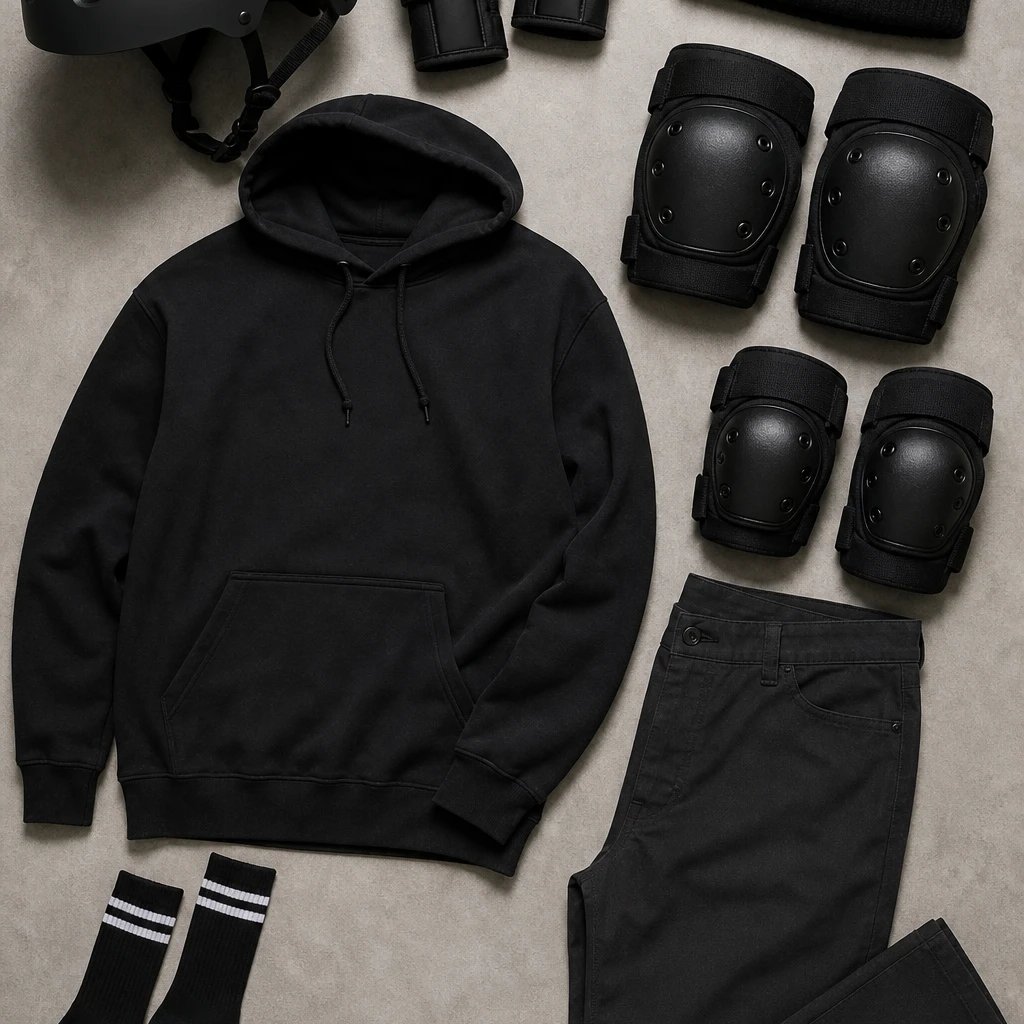
- Fall forward onto knee pads, then let wrist guards take the slide.
- Keep fingers curled into loose fists so nobody skates over them.
- Don't reach back to catch yourself. Backwards falls onto a straight arm are how wrists break; if you're going backwards, tuck your chin and try to sit down.
Wrist guards are genuinely non-negotiable for adult beginners — wrists are the most-injured part of the body in skating, and guards are the cheapest gear you'll buy. Knee pads come second. Everything else is optional at this stage; protective gear is the one place we'd tell you not to economise.
Turning
Turning is a weight shift, not a steering action.
To go left, look left, drop your left shoulder slightly, and press a little harder on your right skate. The skates follow your eyes and hips — genuinely, if you stare at the ground in front of you, you'll go straight into whatever you're staring at.
For sharper turns, stagger your feet slightly (one skate a half-boot ahead of the other) and lean into the turn. Practise wide, lazy S-curves down an empty lot before you attempt anything tight.
Your First Four Sessions
Learning this in order, thirty minutes at a time, beats one exhausting three-hour attempt.
| Session | Focus | You're ready to move on when… |
|---|---|---|
| 1 | Standing, ready position, marching in place | You can march for a minute without grabbing anything |
| 2 | Marching forward, first V-strides, toe stop drag | You can start and stop on flat ground, deliberately |
| 3 | Longer glides, plough stop, gentle turns | You can glide 3 seconds on one skate |
| 4 | Linking strides, S-curves, controlled speed | Skating feels boring rather than frightening |
Thirty to forty-five minutes is the right length. Skating uses stabiliser muscles you don't otherwise train, and technique degrades fast once your ankles tire — which is when falls happen.
Common Problems and Fixes
"My ankles keep rolling inward." Usually lacing, not weakness. Tighten the ankle. If it persists, your boot may be too soft for your weight — stiffer boots genuinely help heavier and taller skaters.
"My skates shoot out in front of me." You're leaning back. Exaggerate bending your knees and putting your weight over your toes; it will feel like you're falling forward and you won't be.
"I can't stop without panicking." Practise the toe stop drag standing still, holding a wall, until the motion is automatic. Panic comes from unfamiliarity, not danger.
"My feet hurt/go numb after ten minutes." Almost always too tight over the arch, or the wrong size. Loosen the middle laces first. If it continues, check your sizing — our size calculator takes two minutes and skate sizing rarely matches your shoe size.
"I'm fine on flat ground but terrified of slopes." Correct instinct. Don't attempt hills until your stops are automatic. There's no rush and no shame — experienced skaters walk down steep sections too.
Not sure what size you need?
Skate sizing isn't shoe sizing. Two minutes with our free calculator saves a return and a lot of blisters.
Find Your Skate Size →FAQ
How long does it take an adult to learn to roller skate?
Most adults can march, stride and stop on flat ground within two or three sessions of about half an hour. Comfortable, confident skating usually lands somewhere between five and ten sessions. Adults often learn the mechanics faster than kids — they're just more afraid of falling, which is the real limiter.
Is roller skating harder than ice skating?
Different, not harder. Roller skates are more stable standing still (four wheels beat one blade), but stopping is less intuitive — there's no edge to dig in, so you have to learn a technique rather than scrape. People who skate on ice usually adapt within a session.
Can I learn to roller skate at 40, 50, or older?
Yes, and plenty of our customers do. The two things that matter more with age are protective gear (wear it — wrists and hips) and surface choice (smooth and flat, always). Balance improves with practice at any age.
Should I learn on quads or inlines?
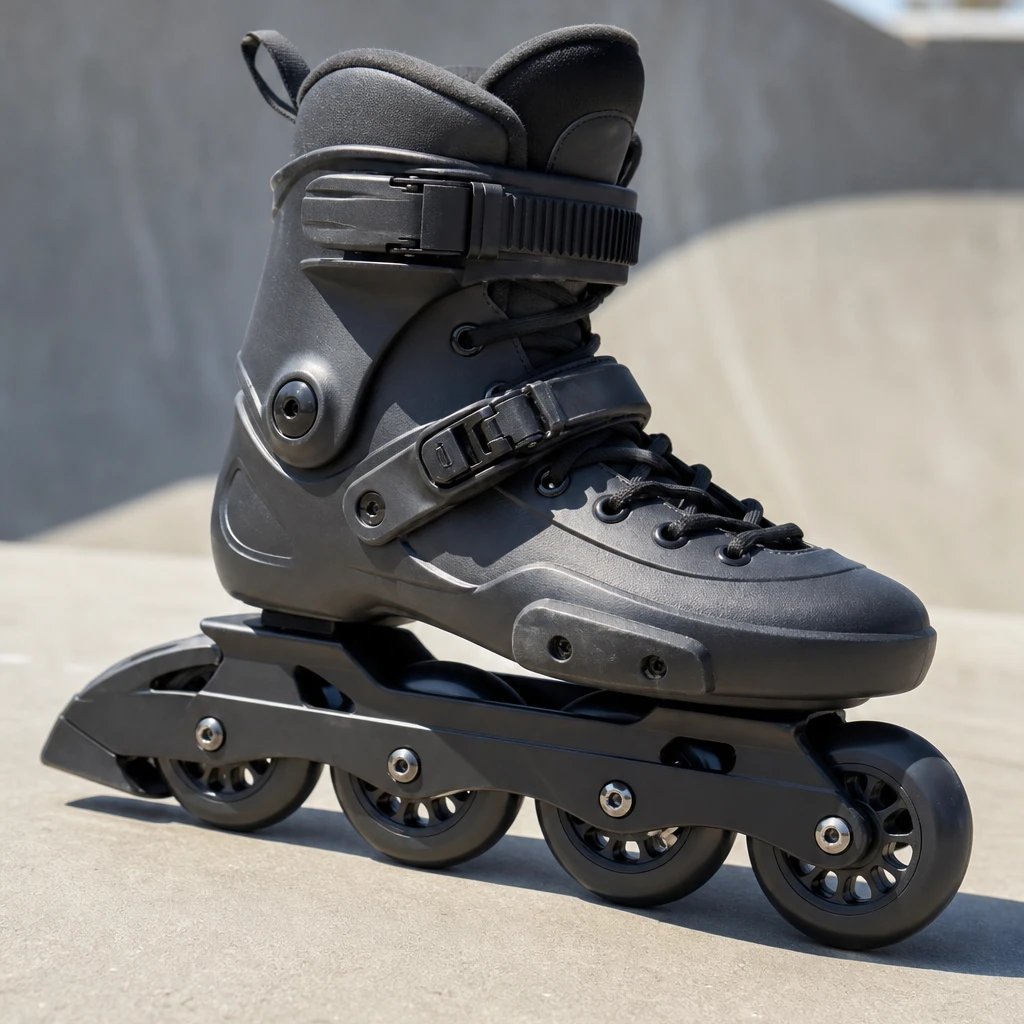
Quads are generally easier for a first session: the four-wheel footprint is more stable at low speed, and the toe stop is more intuitive than a heel brake. Inlines are faster and better for distance. See our inline vs roller skates comparison for a full breakdown.
Where should I practise?
Somewhere smooth, flat and empty. Indoor sessions at a community centre are ideal because the floor is predictable and there's a wall to grab — see our Canada-wide rink guide. Outdoors, aim for an empty parking lot rather than a busy path.
Learning in Toronto? Our shop staff fit skates in person and will happily tell you if a pair is wrong for you. Come see us or browse roller skates online.